
If you train regularly, whether that’s strength training, running around Victoria Park, or hitting a high-intensity session in Hackney, you already know consistency is key. But what you do between your workouts is just as important as the sessions themselves.
At KBPT, we talk a lot about sustainable progress. And one of the most overlooked tools for recovery, performance and injury prevention is stretching between workout sessions.
Not as an afterthought. Not rushed at the end of a class. But intentional, structured mobility work that supports your body long term.
Whether you’re training with us in Hackney, Shoreditch, Canonbury or Caledonian Road, this is why recovery work deserves a place in your weekly routine.
Why Stretching Between Workouts Is Essential for Recovery
When you strength train or complete intense cardio workouts, your muscles experience small amounts of stress and micro-tearing. That is completely normal and part of how we build strength. However, without proper recovery, tightness can build up and begin to restrict your movement patterns.
That’s why stretching between gym sessions is important.
It helps to:
- Improve flexibility and joint range of motion
- Reduce muscle stiffness after strength training
- Support blood flow and nutrient delivery to muscles
- Lower the risk of common training injuries
- Improve posture, especially if you sit at a desk all day
For many of our North and East London clients, balancing training with busy jobs, commuting and long hours at a desk, mobility work becomes even more important. Tight hips, rounded shoulders and lower back tension are incredibly common in professionals working across London.
If you’re searching for “how to recover between gym sessions” or “how to reduce muscle tightness after workouts,” structured stretching is one of the simplest and most effective tools available.
It’s not about becoming ultra-flexible. It’s about keeping your body moving well.
The Difference Between Stretching and Mobility Work
There is often confusion around static stretching, dynamic stretching and mobility training. They are not the same, and understanding the difference matters.
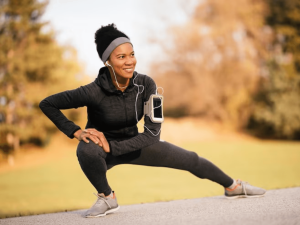
Static stretching involves holding a stretch for 20 to 60 seconds, which is ideal post-workout or on recovery days. Think hamstring stretches, hip flexor stretches and chest openers.
Dynamic stretching involves controlled movement through a range of motion. This is better suited to your warm-up before a workout.
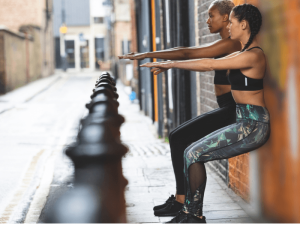
Mobility training focuses on building controlled strength through range. Examples include deep squat holds, controlled shoulder rotations or slow hip hinges. This is especially effective between strength training sessions because it builds resilience, not just flexibility.
If you are strength training two to four times per week with a personal trainer in North or East London, adding one or two short mobility sessions on rest days can dramatically improve how you feel in your next workout.
How Stretching Improves Strength and Performance
A common myth is that stretching makes you weaker. In fact, when done correctly and at the right time, the opposite is true.
Improved mobility allows you to move through exercises with better form. Better form means better muscle activation. Better activation leads to stronger lifts and better long-term results.
For example:
- If your hip flexors are tight, your squat depth may be limited.
- If your shoulders lack mobility, your overhead press may feel unstable.
- If your calves are stiff, your running stride may shorten.
By stretching between workout sessions, you give your body access to fuller, safer ranges of motion. That translates directly into more effective strength training sessions and improved athletic performance.
If your goal is fat loss then better movement quality also means better calorie output and safer training consistency.
What a Simple Between-Session Stretch Routine Looks Like
You do not need an hour-long yoga class every day. Ten to twenty minutes of focused work is more than enough.
A simple recovery stretching routine for gym-goers could include:
- Hip flexor stretch
- Glute stretch or figure four stretch
- Hamstring stretch
- Thoracic spine rotations
- Chest and shoulder opening stretch
Hold each stretch for 30 to 45 seconds and focus on slow, controlled breathing. You should feel tension but never pain.
If you trained your lower body heavily the day before, then focus on hips, quads and calves instead. If you completed an upper body session, then prioritise shoulders, chest and thoracic mobility to mix things up.
Even adding one dedicated mobility session midweek can make a noticeable difference to stiffness and recovery.
Injury Prevention and Long-Term Progress
One of the biggest frustrations we see is clients making strong progress, then being sidelined by avoidable injuries.
Tight muscles can alter movement patterns. Altered movement patterns increase strain on joints. Over time, that strain builds into discomfort or injury. Stretching between workouts acts as maintenance. It keeps tissues supple, supports joint health and allows you to train consistently.
If you are investing time and energy into personal training in North or East London, it makes sense to protect that investment with proper recovery habits. At KBPT, we build mobility and recovery into our programmes because we want clients training for years, not weeks.
Stretching Is About Looking After Your Future Self
Recovery work may not feel as exciting as lifting heavy or pushing through a conditioning session. But it is part of becoming stronger. Stretching between workout sessions is not about doing more. It is about training smarter. When your body feels good, you are more motivated to train.
If you are currently training in Haggerston, Plaistow, Stepney or surrounding areas across North and East London, and feel tight, stiff or unsure whether you are recovering properly, structured support can make all the difference.
Book your free consultation with KBPT and we will assess your movement, review your training schedule and show you exactly how to structure your recovery so it supports your goals.
Or, if you would prefer clarity first, book a free fitness check-in call and let’s map out what your body needs right now.