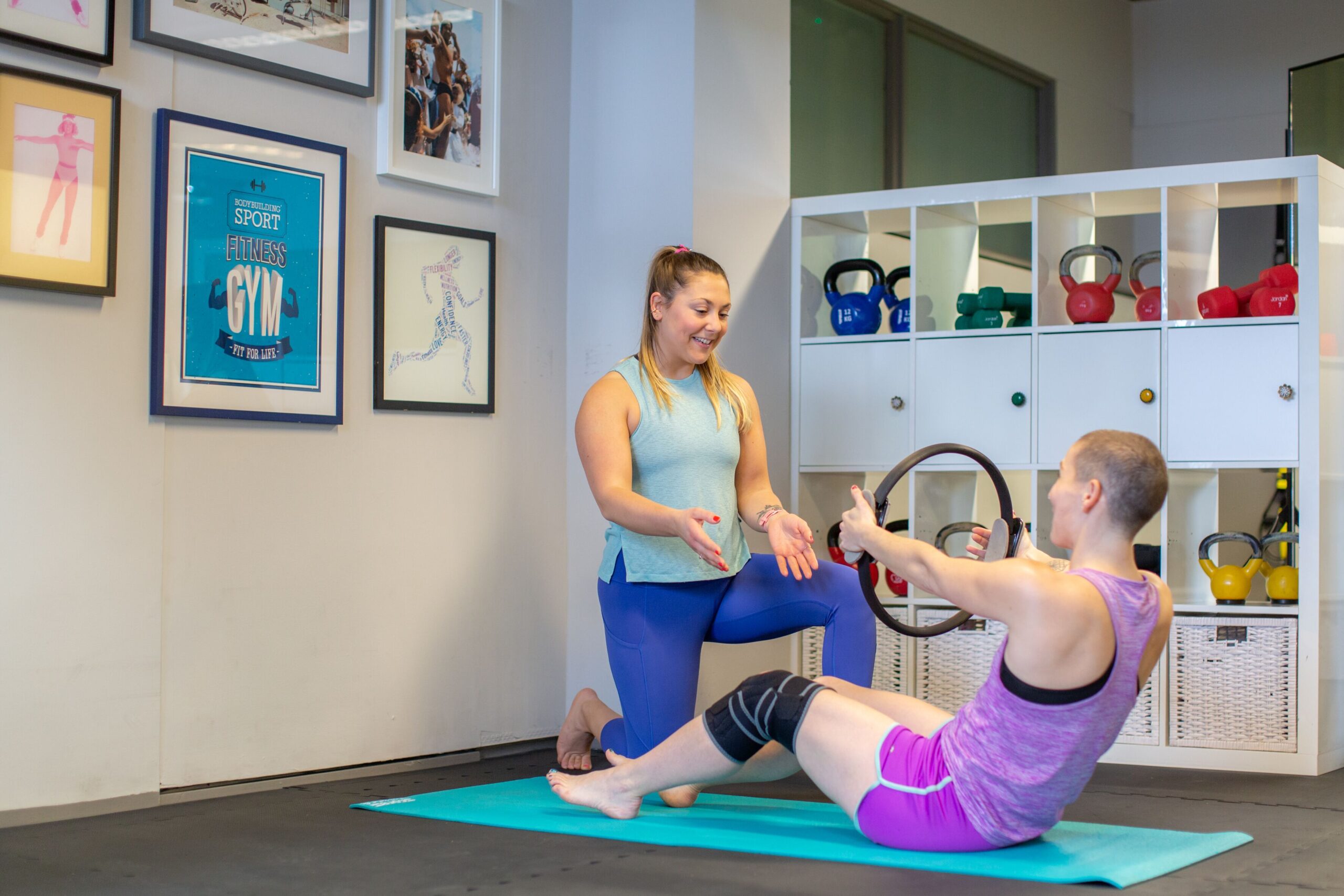
What is rehabilitation training?
It’s really important that you do the right kind of exercise during your rehabilitation. Your workouts need to be gentle, gradual and in line with your doctor’s or physio’s recommendations. Working with a personal trainer is a great way to make progress. We can work closely with your physio or consultation to ensure we are providing the highest level of care.
What is the KBPT approach?
Your recovery might feel like a long and frustrating road but we promise, there is light at the end of the tunnel, and our KBPT trainers will get you there. Our personal training programmes for injury rehabilitation and illness include:
- Working closely with your physio (or recommending a local physio if you don’t already have one) so that your physiotherapy and personal training work hand in hand.
- Keeping you active even if your injury is preventing you from doing your normal exercise regime – doing something is always better than doing nothing.
- Creating a bespoke personal training programme whether you’ve hurt your back, knees, shoulders, hips or ankles.
- If you’ve had an operation, building a gentle exercise plan to get you back to full fitness.
- Motivating you when you’re feeling like enough is enough (we know rehab can be really tough…)
- Giving you nutritional advice so you don’t gain weight while you can’t exercise fully.
- Helping you with flexibility so you don’t overcompensate and get tightness in other parts of your body while your injury is healing.
Benefits of training during injury recovery?
Done right, rehabilitation training can support a faster, safer and more complete recovery.
Some of the key benefits include:
- Accelerates recovery time – Targeted movement can help tissues heal faster by improving blood flow and reducing inflammation.
- Reduces risk of re-injury – Strengthening supporting muscles and correcting imbalances lowers the chances of getting injured again.
- Improves mobility and joint function – Rehab exercises can help you regain a full range of motion in affected areas.
- Boosts mental health and confidence – Staying active during rehab supports mood, reduces frustration, and helps you feel more in control.
- Rebuilds muscular strength and endurance – Rehab isn’t just about healing – it’s about coming back stronger.
- Promotes better body awareness – You’ll learn how to move with more control and precision, reducing strain on vulnerable areas.
- Addresses postural issues – Injury often leads to compensatory patterns; rehab helps correct posture and alignment.
- Supports immune function – Gentle exercise has been shown to positively impact the immune system, aiding overall recovery.
- Improves sleep and energy – Regular, appropriate movement during recovery can help with sleep quality and reduce fatigue.
- Prevents secondary complications – Staying active prevents stiffness, loss of balance, and issues in other body areas from inactivity.
- Improved circulation to the injured area, which helps speed up healing
- Confidence in your movement again – helping you feel like yourself
- Supports long-term injury prevention – By addressing the root cause of the injury and improving strength, stability, and movement patterns, rehab training helps ensure you come back stronger and stay injury-free in the future.