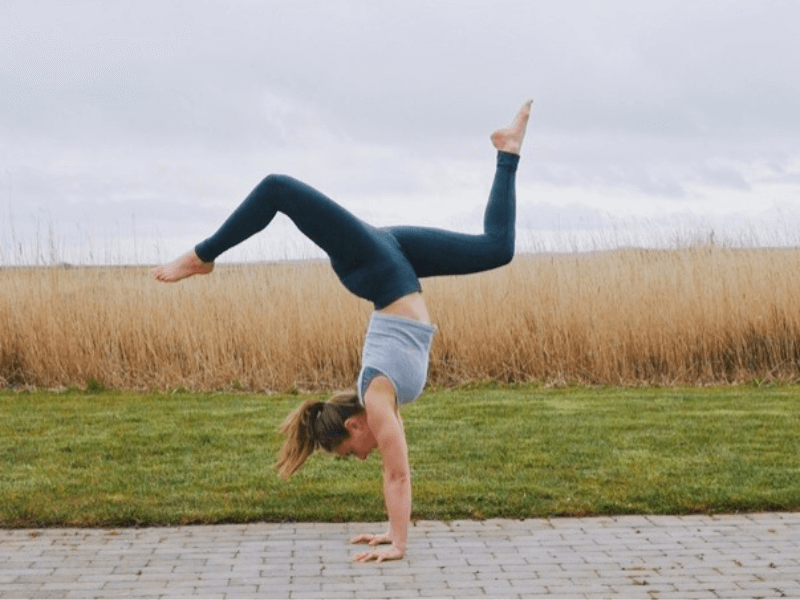
If one of your New Year fitness goals for 2026 is to master a handstand, you’re in the right place. At KBPT, we’re seeing more and more women across Hackney, Walthamstow and Victoria Park choosing skills-based goals. And it’s not just for aesthetics, it’s for confidence, functional strength and the joy of reconnecting with what their bodies can do.
A handstand is one of the most empowering skills you can train. It blends strength, mobility, balance, coordination and mindset, and with the right step-by-step approach, beginners can make genuine, consistent progress. Whether you’re practising in your living room, a park in Walthamstow or one of East London’s many gyms such as Bow or Leytonstone, this guide will help you build the foundations safely and understand the process behind achieving a strong, controlled handstand in 2026.
Why a handstand is the perfect New Year skill goal
Many people enter January wanting structure, challenge and something more meaningful than weight-focused resolutions. A handstand ticks every box:
- It builds upper-body strength, shoulders, arms and upper back
- It strengthens your core and posterior chain
- It improves balance, coordination and body awareness
- It builds joint stability, especially in wrists and shoulders
- It encourages patience, discipline and resilience
- It gives a huge sense of achievement when things “click”
For the women we coach at KBPT, handstand training often becomes symbolic, a way to reclaim physical confidence, push past limitations and build capability on their own terms. It’s not about perfection or performance; it’s about play, progress and empowerment.
Start with the foundations: mobility, wrists, shoulders and core
Before going upside down, you need to prepare your joints, posture and muscles. This phase is essential for beginners and helps you stay injury-free as the skills progress.
Wrist and shoulder preparation
Handstands demand load-bearing through the wrists and strong, stable shoulders.
Begin each session with:
- Wrist mobility: circles, palm lifts, gentle flexion/extension ranges
- Weight-bearing prep: palm presses, “palm push” variations against floor or wall
- Shoulder warm-ups: scapular shrugs, wall slides, downward-dog to plank transitions
These movements strengthen stabilising muscles and prepare your joints for supporting your bodyweight.
Core alignment and control
The strongest handstands come from strong bodies, not from kicking harder. Develop core shape and awareness through:
- Hollow-body holds
- Dead bugs
- Planks and side planks
- Posterior chain activation (glute bridges, hip lifts)
This teaches you to stay long, tight and aligned. It’s the key to balancing upside down.
Commit to 5–10 minutes of foundation work before every practice. The consistency pays off massively.
Learn the movement: safe and effective handstand progressions
Just like training for your first 10K, skill development is progressive. Don’t jump straight to freestanding handstands, you’ll learn faster and safer with structured steps.
1. Wall-assisted handstands
Place your hands shoulder-width apart and a hands-length from the wall. Kick up gently and rest your feet on the wall.
Focus on:
- Active shoulders (“push the floor away”)
- Straight arms
- Engaged ribs and glutes
- A long line from wrists → shoulders → hips → heels
The goal here is comfort upside down, not duration. Wall holds give stability so you can work on alignment without fear of falling.
2. Controlled descents (negatives)
From a wall handstand, slowly lower your feet back to the floor with control.
This teaches:
- Slow, safe exits
- Core control
- Balance awareness
- Shoulder stability
If you’ve ever seen handstand practitioners who look effortless, this is the drill they’ve mastered.
3. Balance awareness and micro-adjustments
Once you’re comfortable on the wall, start learning how to “feel” balance. Practise:
- Shifting weight through palms and fingertips
- Small hip adjustments
- Lifting one foot off the wall
- Breathing control while inverted
These small drills build proprioception, the secret ingredient to eventually balancing independently.
Supplement your handstand training with strength and mobility
A strong, mobile body makes handstands easier.
Add:
- Upper-body strength: pike push-ups, overhead presses, shoulder taps
- Core stability: hollow rocks, dead bugs, slow mountain climbers
- Mobility: shoulders, thoracic spine, wrists and hamstrings
- Recovery: stretching, foam rolling, warm-ups
Think of it as your handstand conditioning plan, everything supports the goal.
Mindset: the part no-one talks about
Handstands require mental resilience as much as physical conditioning. Progress is rarely linear and that’s normal.
Here’s what we encourage at KBPT:
- Celebrate small wins: a better kick-up, a smoother exit, 1 second of balance
- Train consistently rather than intensely
- Record your sessions occasionally: alignment feels very different from how it looks
- Rest when something feels “off”
- Stay patient: for most beginners, a controlled handstand takes weeks or months
You’re not behind. You’re learning.
A handstand is more than a fitness trick
Handstand training is functional strength, joint stability, mobility, discipline and play all rolled into one. Whether you’re new to fitness or levelling up your training in 2026, this skill can reshape your relationship with your body, shifting the focus from what it looks like to what it can do.
If you’re in Hackney Wick, Mile End, Clapton or anywhere across East London and want expert guidance, KBPT can help you:
- build the foundations safely
- create personalised progressions
- strengthen your upper body and core
- overcome fears around inversion
- achieve your 2026 skill goals with confidence
Ready to learn your first handstand?
Book a consultation with KBPT and start your journey upside down with support, structure and a trainer in your corner.