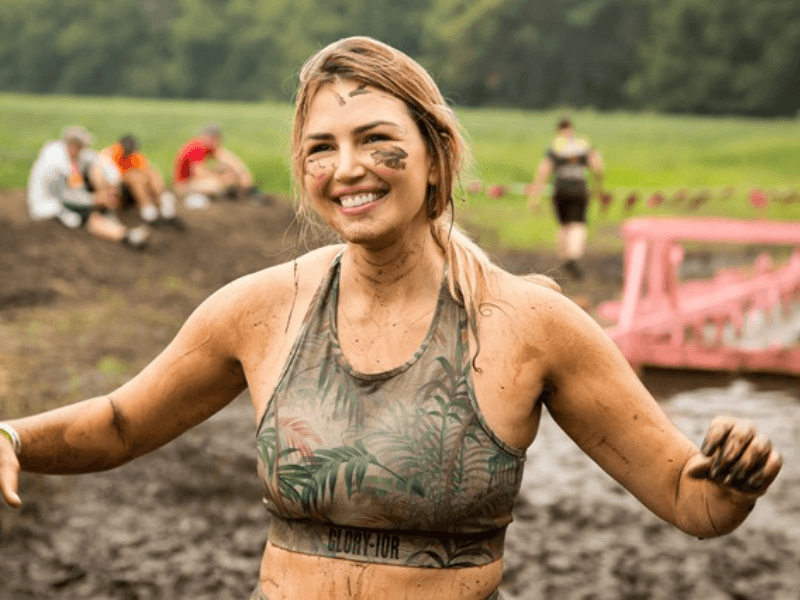
If you’ve set yourself a bold fitness goal for 2026 and you’re looking for something bigger than a standard run, Tough Mudder might already be on your radar. Whether you’re aiming for the classic 8–10 mile course or a shorter mud-run format, preparing properly makes all the difference. That’s not just for performance but for confidence, safety and enjoyment.
At KBPT, we coach women across Hackney, Walthamstow, Victoria Park and East London through everything from first 5Ks to their first obstacle course races. Tough Mudder is one of the most rewarding challenges our clients take on because it requires a blend of running, strength, mobility, grip and mindset. It’s functional fitness in its purest form and an incredible New Year goal if you want something empowering, challenging and totally unforgettable.
If you’re ready to commit to a big challenge in 2026, here’s your complete guide to training smart, staying injury-free and turning Tough Mudder from “maybe one day” into “I did it.”
Think Of Tough Mudder As Full-Body Training, Not Just Cardio
A Tough Mudder isn’t a run with a few obstacles. It’s a full-body athletic task involving climbing, crawling, carrying, hauling, jumping and adapting. Runners who only train with running often struggle; gym-goers who only lift often find themselves breathless. Success comes from building functional fitness, a mix of strength, endurance, mobility, balance and resilience.
Why That Matters
Running stamina: You’ll cover miles between obstacles and you’ll spend a lot of time on mud, hills, uneven ground and slippery terrain. Aerobic conditioning keeps you steady, calm and capable under fatigue.
Upper-body strength: Walls, monkey bars, rope pulls and partner-based obstacles demand pulling strength, pushing power and shoulder stability. You can find outside gyms across East London, like Stratford and Haggerston.
Grip strength: Grip is usually the first thing people lose. Muddy bars, wet ropes and fatigue make even the simplest hold surprisingly difficult.
Core and joint stability: Crawling, jumping, landing, climbing and bracing all rely on a strong, stable core, plus hip and ankle mobility to move efficiently and safely.
To prepare properly, your training plan needs more than miles. It needs strength, functional movement and smart progressions.
The Core Training Elements You Can’t Skip
1. Endurance & running training
Even if you’re not a “runner,” you can absolutely build the aerobic base you need. For most Tough Mudder distances, your target is steady, sustainable cardio rather than outright speed.
Include:
- Steady-state runs or trail runs to build base endurance
- Intervals or hill sprints to simulate bursts of effort
- Runs on varied terrain — parks, trails, inclines, uneven paths
Training this way builds lung capacity, leg strength and mental stamina, all essential for race day.
New Year is a brilliant time to begin this progression because cooler temperatures and quieter parks make long, steady runs easier to commit to. Many women begin their running journey in January with goals like “run 5K” or “run three times a week” and Tough Mudder becomes the next motivating step.
2. Functional strength & bodyweight training
Strength is what helps you climb, carry and pull. It keeps your joints safe and stable as fatigue builds.
Upper-body strength: Push-ups, rows, pull-ups or assisted pull-ups, kettlebell or dumbbell pressing and pulling.
Lower-body strength: Squats, lunges, deadlifts, step-ups, kettlebell swings and single-leg work.
Core stability: Planks, anti-rotation presses, loaded carries, single-leg balance work, and movements that challenge control in multiple directions.
This kind of strength training is especially beneficial for women building confidence with weights or returning to training in the New Year. It’s accessible, progressive and functional, perfect for building obstacle-ready fitness.
3. Grip strength & grip endurance
Grip strength is a game-changer in obstacle racing. Wet, muddy or slippery bars quickly expose weak grip endurance.
Integrate:
- Dead hangs
- Farmer’s carries
- Rope pulls or towel-grip rows
- Mixed-grip holds
- Repeated hanging or carrying intervals
If you have access to a rig or monkey bars in a park (Victoria Park, Hackney Marshes and Lloyd Park all have options), practise in different conditions: dry, wet, fatigued.
Grip endurance is as important as strength: it’s the ability to hold on after miles of running.
4. Mobility, balance & agility
These elements help you move safely, fluidly and efficiently through unpredictable obstacles.
Include:
- Hip, ankle and shoulder mobility work
- Dynamic warm-ups and functional movement prep
- Agility drills, ladder work, balance training
- Crawls, carries, low transitions and jump-landing drills
These help reduce injury risk and improve confidence, particularly helpful for women who find unpredictable movement patterns daunting at first.
Mental & Practical Preparation
Tough Mudder is as much a mindset challenge as a physical one. Cold water, sudden shocks of effort, unexpected terrain, your mental resilience matters.
Build mental strength with:
- Visualisation of obstacles and success
- Consistent training so you trust your preparation
- Practising in “imperfect” conditions (safely) whether that’s cold, wet, early morning, muddy
Mindset training builds confidence and confidence is what carries you through the tough moments.
Race-Day Practical Prep
- Wear old, grippy footwear you don’t mind ruining
- Choose tight-fitting clothes or compression gear that won’t flap when wet
- Fuel and hydrate properly: obstacles + running deplete energy quickly
- Train with friends or a trainer: teamwork helps massively on the course
- Expect to get muddy, soaked, scraped and exhausted, that’s the fun of it
Why This Training Approach Works
Obstacle races are unpredictable, slippery obstacles, steep terrain, long running stretches, sudden strength challenges. Training only for cardio or only for strength won’t prepare you properly.
A mixed, functional approach:
- Builds race-day confidence
- Reduces injury risk
- Supports long-term fitness
- Improves mobility and control
- Makes the entire experience more enjoyable
If you’re looking for a New Year fitness goal that challenges you physically and mentally (and leaves you feeling unbelievably proud) Tough Mudder is the perfect choice. And with a structured plan, smart programming and the right support, you’ll be more than ready to take it on.