Strong, toned glutes are one of the most common fitness goals we hear from women at KBPT. And while there’s nothing wrong with wanting your jeans to fit well or feeling confident in your body, glute training goes far beyond aesthetics.
Your glutes are some of the most powerful muscles in the body. They support posture, protect the lower back, improve athletic performance, and make everyday movement feel easier. Whether you’re training with a personal trainer in East London, exercising outdoors in Hackney parks, or fitting workouts around a busy lifestyle, building strong glutes is one of the smartest long-term investments you can make in your health.
Despite what social media might suggest, endless spin classes or jogs through Haggerston Park won’t build strong, shapely glutes on their own. Resistance training is key. Below, we break down how to train your glutes effectively, safely and sustainably, without wasting time or risking injury.
Why glute strength matters (beyond aesthetics)
The glutes play a vital role in almost every lower-body movement, including walking, running, lifting, climbing stairs and even standing upright. Weak or underactive glutes can contribute to lower back pain, knee discomfort, hip issues and inefficient movement patterns.
Strong glutes support:
- Better posture and pelvic stability
- Reduced risk of injury
- Improved performance in strength and HIIT training
- More power, balance and efficiency in everyday life
At KBPT, we prioritise glute strength not just to help clients look strong, but to help them move well and feel confident in their bodies long-term. This is especially important for women training in busy urban environments like Hackney Central, Wanstead or Bethnal Green, where daily movement adds up quickly.
The role of resistance training for glute development
One of the biggest misconceptions we see is that cardio alone will create a toned lower body. While cardiovascular training absolutely has its place, glutes respond best to progressive resistance training.
To build and shape your glutes effectively, your training should include:
- Compound lower-body exercises
- Progressive overload (gradually increasing the challenge)
- Controlled tempo and good technique
- Adequate recovery between sessions
This is where working with a personal trainer can make a real difference. Well-structured programming ensures your glutes are doing the work, rather than your lower back, quads or hamstrings compensating.
Walking lunges: a glute-building staple
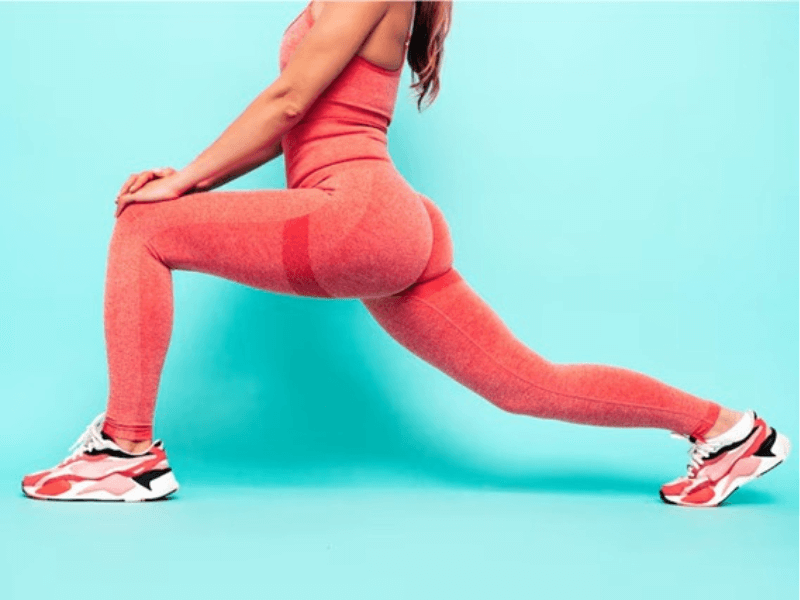
Walking lunges are one of the most effective exercises for developing glute strength, balance and muscular endurance. They place the glutes under continuous tension while also challenging coordination and core stability.
Start with bodyweight to master your technique. Focus on:
- Taking a long stride to properly load the glutes
- Keeping your torso upright
- Driving through the front heel
As strength improves, adding dumbbells or kettlebells increases the stimulus and supports muscle development. Walking lunges are also metabolically demanding, making them an excellent choice for fat loss and conditioning.
We often program walking lunges for outdoor sessions around Hackney Marshes or Victoria Park, where space allows for longer sets and natural movement patterns.
Back squats: building strength and shape
If you had to choose one exercise to support overall lower-body strength and glute development, the back squat would be a strong contender. Squats train the glutes, quads, core and upper back when performed correctly.
Depth matters. Partial squats limit glute engagement, so aim to squat as deep as your mobility allows while maintaining good form. Start light, prioritise technique, and gradually increase load over time.
Using a slower tempo (especially on the way down) increases time under tension and improves control. Squats are a cornerstone movement in many of our East London personal training programmes because they deliver results when programmed well.
Hip thrusts: targeting the glutes directly
Hip thrusts have grown in popularity, and for good reason. They are one of the most effective exercises for directly targeting the glute muscles.
When performed correctly, hip thrusts allow for strong glute activation without placing excessive strain on the lower back. Technique is everything here, including foot placement, rib positioning and achieving full hip extension at the top.
At KBPT, we often introduce hip thrusts with lighter loads initially, focusing on connection and control. Higher repetitions can be effective early on, with load progressing gradually as strength and confidence improve.
Reverse hypers: supporting posterior chain strength
Reverse hyperextensions are an excellent accessory exercise for strengthening the posterior chain, including the glutes, hamstrings and lower back. They support spinal health while encouraging controlled glute engagement.
Using a slow tempo and a brief pause at the top helps maximise muscle activation. This movement is particularly useful for clients who want to build strength while protecting their lower back, something we prioritise in our all-female training environment.
Consistency, recovery and smart programming
Building strong, toned glutes doesn’t happen overnight. Consistency, intelligent programming and proper recovery are essential.
Training the glutes two to three times per week, with sufficient rest between sessions, allows the muscles to adapt and grow without burnout. Nutrition, hydration and sleep also play a key role in how effectively your body responds to training.
This is why personalised coaching matters. A programme that fits your lifestyle, training history and recovery capacity will always outperform generic workouts found online.
Ready to build stronger glutes the right way?
If you want to build strong, toned glutes without guesswork, injury or wasted time, working with a personal trainer can help you train with confidence and clarity.
KBPT offers all-female personal training across Hackney and East London, with tailored programmes designed around your goals, experience level and lifestyle.
Book your free consultation or a complimentary 15-minute fitness check-in call today and let’s build strength that supports your body for life.