Your step-by-step guide to one of the most common New Year fitness goals.
January is the month when many people set big fitness goals and year after year, “I want to get my first pull-up” sits right near the top of the list. And it makes sense: a pull-up isn’t just a move, it’s a milestone. It represents functional strength, confidence, body control and the sense of achievement that comes from doing something you once thought was impossible.
At KBPT, we’ve helped East London clients across Hackney Central, Stamford Hill and Cambridge Heath go from zero reps to gliding their chin over the bar with control. Whether you’re starting completely from scratch or you’ve been “nearly there” for months, your first pull-up is achievable in 2026 and this guide will show you exactly how to get there.
Our approach is simple: smart progressions, consistency, body awareness and patience. No shortcuts, no ego lifting, just a structured plan that works.
Why Pull-Ups Matter (and Why They’re Hard to Begin With)
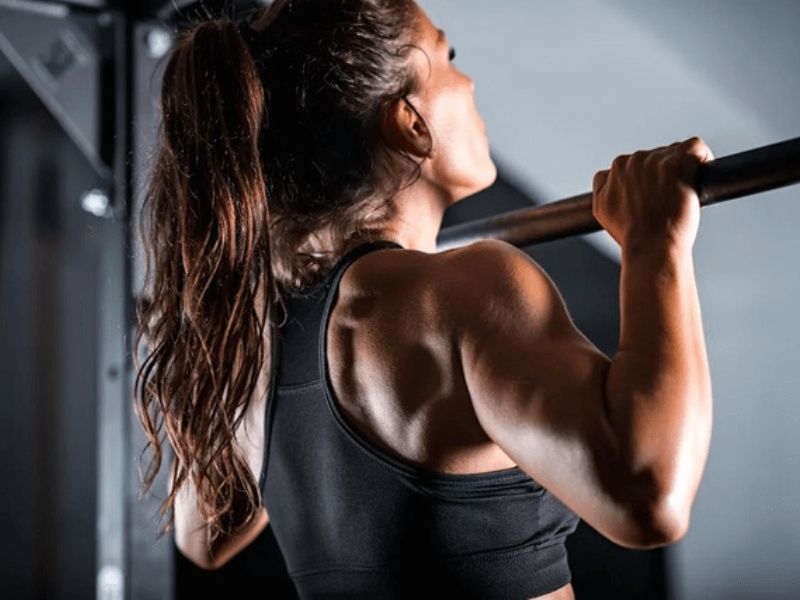
A pull-up uses your entire upper body:
- Lat muscles
- Upper back and mid-back
- Biceps
- Rear delts
- Grip
- Deep core
Unlike a dumbbell row or lat pulldown, you’re lifting your whole body weight, which requires coordination, stability and control.
That’s why the pull-up is one of the most popular New Year strength goals. It’s a powerful marker of progress, especially for women who want to build strength and confidence.
At KBPT, we always remind clients: A pull-up isn’t a test of brute strength. It’s a test of technique, patience and progression.
If “Do my first pull-up” is on your 2026 fitness goals list, you’re in the right place and you absolutely don’t need to be “strong already” to get started.
Step 1: Build Your Foundation: Grip Strength, Shoulder Stability & Back Activation
Most people skip this phase… and it’s the reason they stall. Before you pull, you need to hang, control and stabilise.
Dead Hangs
A non-negotiable starting point.
How to do them:
- Grip the bar slightly wider than shoulder width.
- Hang with arms straight, shoulders relaxed but engaged.
- Core switched on.
- Hold for 20–30 seconds, 2–3 sets.
Why it matters: Grip strength improves fast, your shoulders adapt to supporting your body weight and you learn how to “own the bar” rather than fight against it.
Scapular Pulls
Tiny movement, huge payoff.
How to do them:
- Start in a dead hang.
- Keep arms straight.
- Pull shoulder blades down and back, lifting the body just a few centimetres.
Why it matters: This teaches the crucial first phase of a pull-up, engaging the lats and stabilisers. Without it, most people default to pulling with their arms only, which gets them nowhere.
These two foundations, 2–3 times per week, are your January essentials.
Think of them as the “building blocks” of your 2026 pull-up goal.
Step 2: Build Strength: Rows, Negatives and Assisted Reps
Once your foundation is solid, it’s time to add strength in a way that matches your current ability.
Inverted Rows (Bodyweight Rows)
These mimic the pull-up pattern, but with much more manageable resistance.
How to do them:
- Find a bar at waist height (or use TRX straps).
- Keep your body in a straight line.
- Pull chest to bar.
Why it works: You can build back, arm and core strength without working against full body weight yet.
Assisted Pull-Ups (Bands or Machine)
This lets you practise the full movement pattern with support.
Progress tip: Start with a heavier band or higher machine setting. Reduce assistance week by week until the movement becomes smoother.
Negative Pull-Ups (Eccentrics)
These are one of the most effective methods for getting your first full rep.
How to do them:
- Use a box or jump to get chin above the bar.
- Lower yourself slowly for 3–5 seconds.
Why they help: You’re stronger lowering than lifting. This builds strength fast in the exact muscles used for your pull-up.
All three progressions can be done at the gym, outdoors on East London bars found in West Ham or even in a local park in Bethnal Green.
Step 3: Don’t Skip the “Support Work”: Core, Posture & Mobility Matter
A successful pull-up requires more than strong arms and back. You need stability and alignment.
Back Strength Exercises
Include:
- Dumbbell or barbell rows
- Single-arm rows
- Bent-over rows
Balancing left-to-right strength helps prevent shoulder strain and plateaus.
Core Training
A stable core makes the movement smoother and more efficient.
Try:
- Hollow holds
- Planks
- Dead bugs
Think of your core as the framework your pull-up is built upon.
Mobility & Posture Work
Great pull-ups need great shoulder positioning.
Add:
- Thoracic mobility drills
- Shoulder retraction work
- Scapular stability exercises
The better your posture and control, the easier every rep becomes.
Step 4: Consistency, Realistic Expectations & January Mindset
Here’s the honest part:
There’s no magic “6-week pull-up programme” that works for everyone.
Most people see progress within 6–12 weeks with 2–3 sessions per week — but it depends on:
- Starting strength
- Bodyweight
- Training frequency
- Recovery
- Technique
- Stress, sleep and life commitments
What matters most? Showing up. Improving 1–2% each week. Tracking the small wins.
At KBPT, we celebrate:
- Longer dead hangs
- Smoother scapular pulls
- A lighter band required
- Slower negative reps
- More controlled rows
These micro-wins build into macro results, the exact mindset we encourage during New Year goal-setting season.
If “Get my first pull-up in 2026” is one of your goals, January is the perfect time to start laying the foundations. By spring, many of our clients hit their first full rep and by summer, they’re doing multiple sets.
A KBPT Pull-Up Progression Plan for Your First 6 Weeks
Here’s a simple, realistic structure you can follow:
Weeks 1–2: Build Foundation
- Dead hangs: 20–30 sec x 3
- Scapular pulls: 8 reps x 3
- Inverted rows: 8–10 reps x 3
- Core: hollow holds and dead bugs
Weeks 3–4: Add Strength
- Inverted rows: 10–12 reps
- Assisted pull-ups: 4–6 reps
- Negatives: 3–4 slow reps
- Core + posture drills
Weeks 5–6: Reduce Assistance
- Lighter band or lower machine setting
- Inverted rows with feet elevated
- Negatives slower (4–6 seconds)
- Practice engaging lats at the bottom
From here, most people feel their first full pull-up is within reach.
Your 2026 Pull-Up Starts Now
A pull-up is one of the most empowering strength goals you can set for the new year, it builds confidence, functional strength and real athleticism.
At KBPT, we specialise in helping women across East London build strong, capable bodies through personalised training and realistic progressions that fit busy lives.
If a pull-up is on your 2026 goals list, start now and make it the year you finally get above the bar.