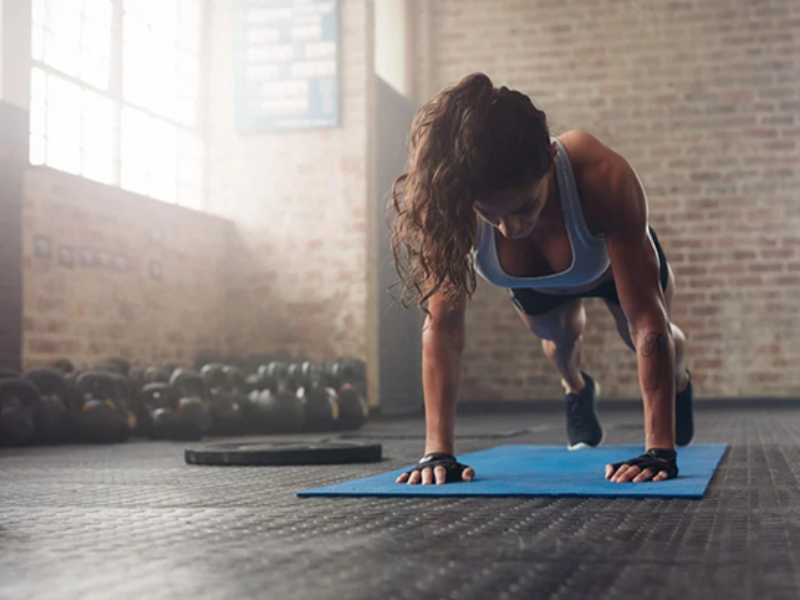
Push-ups are one of those classic bodyweight exercises that almost everyone wants to be able to do and for good reason. They’re simple, effective, and require no equipment. But for many women, the idea of doing a full push-up can feel intimidating or even impossible. The truth is, with the right approach and some consistent practice, anyone can build up to a strong, controlled push-up.
At KBPT, we see push-ups as much more than just a way to work your chest and arms. They’re a symbol of confidence, resilience and strength. When one of our East London clients hits her first full push-up, we celebrate it as a huge milestone. That’s because it’s proof that she’s built real, functional strength and stayed consistent long enough to achieve something she once thought was out of reach.
Here’s how to make that moment happen for yourself.
Why Push-Ups Are So Powerful
Push-ups might look like a simple exercise, but they’re a full-body strength move in disguise. When done with good form, they train:
- Chest (pectorals): for upper body pushing strength.
- Shoulders (deltoids): for stability and control.
- Triceps: to straighten the arms and support the press.
- Core muscles: to keep your spine neutral and body aligned.
- Glutes and legs: yes, even your lower body helps by bracing and holding position.
Because they work multiple muscle groups at once, push-ups are one of the most functional exercises you can do and they’re a brilliant marker of overall strength. They also help improve posture, support shoulder health and build a strong core.
But here’s the secret: the fastest way to get better at push-ups isn’t endless isolation exercises. It’s practising push-ups themselves and making smart progressions that make them achievable at your current strength level.
The KBPT Push-Up Progression Plan
When we coach clients toward their first full push-up, we break it down into manageable steps so they can build strength and confidence without frustration.
1. Knee Push-Ups or Incline Push-Ups
This is where most people start, and it’s a brilliant way to learn the push-up pattern without taking on your full bodyweight.
- Incline push-ups use a bench, barbell, kitchen counter or even a wall to reduce the load. The higher the surface, the easier the push-up so start high and gradually lower as you get stronger.
- Knee push-ups keep you on the floor but shorten the lever by keeping your knees down.
Form tips for both:
- Keep elbows at a 45-degree angle from the body, not tucked in and not flaring out.
- Brace your core like you’re protecting your stomach and keep your body in a straight line.
- Lower chest and hips together – remember…no sagging or dipping!
2. Negative (Eccentric) Push-Ups
Negatives are a game-changer. They build strength where you need it most, (the lowering phase of the movement) which is also where most women struggle at first.
Here’s how to do them:
- Start in a plank position (on toes if you can).
- Slowly lower yourself to the ground over 3–5 seconds.
- Once you’re on the floor, reset however you need to drop to your knees or walk yourself back to the start.
Aim for 3–5 reps per set with full control. The slower you go, the more strength you build.
3. Band-Assisted Push-Ups
When you’re almost ready for a full push-up, a resistance band can give you just enough support to complete the movement.
- Anchor a looped resistance band across your elbows and under a sturdy anchor point overhead (like a squat rack or pull-up bar).
- Perform your push-ups as normal, the band will take a little of the load off the hardest part of the movement.
- Over time, use a lighter band or increase your reps until you can perform them unassisted.
Extra Strength Builders
Alongside practising the push-up itself, we often programme accessory exercises to help speed up progress:
- Chest presses or dumbbell bench press to build chest strength.
- Tricep dips or close-grip presses for lockout power.
- Plank variations to strengthen your core and improve body control.
- Scapular push-ups to build shoulder stability.
These complement your progression work and help you feel stronger overall.
Mindset Matters Too
Learning a new skill like a push-up can feel challenging and that’s a good thing. It teaches patience, discipline, and self-belief. We always remind our clients that progress isn’t linear: some weeks will feel easier, others will feel harder. The key is consistency.
Even if you start with wall push-ups, every rep is a step closer to your goal. Celebrate those small wins (whether that’s your first full range rep to your first set of five) because they’re proof that your training is working.
The KBPT Difference
At KBPT, we love guiding women through these milestones. We combine expert coaching, accountability, and encouragement to make the process enjoyable rather than intimidating.
Whether you train with us at home, in Victoria Park, Hackney Marshes, Plaistow or online, we’ll build a plan that works for you and keeps you progressing safely.
Your First Push-Up Is Closer Than You Think
Building up to your first push-up isn’t just about strength, it’s about proving to yourself that you can do something you once thought was out of reach. With the right progressions, some patience, and a little guidance, you’ll get there.
At KBPT, we’ve helped countless East London women hit this empowering milestone and we’d love to help you do the same.
Ready to start your push-up journey? Book a free consultation and let’s build the strength and confidence you need to nail that first rep.